
Promoting Changes in The Treatment Pattern Of CKD Combined With Hypertension
Mar 23, 2023
Contradictions between RASI renal protection and serum potassium creatinine
Let's start with an interesting story: In the "Catch-22" novel by American author Joseph Heller, according to the "Catch-22" theory, in World War II, fighter pilots, only the mentally ill were allowed Exemption from flying, but must applied for in person. But once you apply, it just proves that you are a normal person, or doomed.

Click to cistanche herba for kidney disease
"Catch 22" reveals an absurd world full of contradictions everywhere. This is just like the dilemma when RASI is used in CKD stage 3-5 non-dialysis patients: on the one hand, there is sufficient evidence that RASI has a renal protective effect independent of the antihypertensive effect; on the other hand, the creatinine induced by RASI /The risk of elevated blood potassium makes most physicians hesitate to use RASI in CKD stage 3-5 non-dialysis patients.
The fish and the bear's paw are in a dilemma, just like the Möbius ring cannot be solved. So how can we bring better treatment options to CKD patients with hypertension?
A new class of drugs unveiled in the 2023 edition of the "Guidelines for the Prevention and Treatment of Hypertension in China"
At the China Hypertension Annual Conference held on March 11, 2023, the 2023 edition of the "Guidelines for the Prevention and Treatment of Hypertension in China" (referred to as the Hypertension Guidelines) was prospected, covering the blood pressure management of people including CKD and other people.
To further help improve the level of hypertension prevention and treatment in my country, the hypertension guidelines continue to focus on innovation. In terms of drug treatment, the 2023 version of the hypertension guidelines plans to add ARNI as a new class of commonly used antihypertensive drugs based on the traditional five categories of antihypertensive drugs, for initial and maintenance treatment, opening a new pattern of antihypertensive treatment, and promote the progress of China's hypertension prevention and treatment.
Why is ARNI recommended by the guidelines as a new class of commonly used antihypertensive drugs? Is it possible to solve the "dilemma" of RASI?
ARNI balances the effective filtration pressure and breaks through the bottleneck of RASI
Sacubitril-valsartan, as the first ARNI drug, was approved for the indication of essential hypertension in my country in June 2021. The drug can inhibit the degradation of the natriuretic peptide by neprilysin while inhibiting angiotensin receptors, exerting diuretic, natriuretic, vasodilation, and sympathetic inhibition effects.

The effect of sacubitril and valsartan on glomerular filtration pressure is not the same as that of traditional RASI. Traditional RASI dilates the efferent arteriole more than the afferent arteriole, resulting in a decrease in effective glomerular filtration pressure, while natriuretic peptide expands the afferent arteriole and constricts the efferent arteriole, increasing effective filtration pressure. Adding the two effects together, the expansion of the afferent and efferent arterioles is the same. Under the combined effect of the two, sacubitril and valsartan have balanced the effective glomerular filtration pressure, thereby affecting Medication is safer for non-dialysis patients with CKD stage 3-5, and it meets the needs of the whole course of CKD treatment from the mechanism.
ARNI is better than "RASI" for "RASI"
Strong blood pressure
The Meta-analysis conducted by Academician Ge Junbo found that 200 mg of sacubitril and valsartan can effectively lower blood pressure up to 16.8 mmHg, and the reduction in systolic blood pressure is better than that of the five traditional antihypertensive drugs1
√CKD Phase 1-2: A head-to-head randomized controlled clinical study in Japan showed that sacubitril-valsartan 200mg continued to reduce the 24-hour blood pressure of patients after 8 weeks of treatment. Compared with olmesartan, the systolic and diastolic, blood pressure was further reduced by 5mmHg and 2mmHg. In addition, sacubitril valsartan 400mg can achieve a greater reduction in blood pressure2;
√CKD stage 3-4: Another study from Japan showed that sacubitril-valsartan 200mg rapidly lowered blood pressure by 15/5mmHg after 1 week of treatment, and continued to reduce blood pressure to 21/8mmHg3 after 8 weeks of treatment;
√Dialysis: A study from China showed that systolic and diastolic blood pressure was reduced by 22/8mmHg after 12 weeks of treatment with sacubitril and valsartan. Patients had higher baseline blood pressure4.
Cardiorenal protection
√CKD Phase 1-2: A Japanese study showed that 8 weeks of sacubitril-valsartan treatment significantly reduced the urinary albumin/creatinine ratio (uACR) by 15%, and another European randomized controlled study showed that sacubitril-valsartan Sartan treatment reduced uACR by 52% for 1 year, 9% more than irbesartan, demonstrating its powerful effect in reducing proteinuria3,5;
√CKD Phase 3-4: The CKD subgroup results of the PARADIGM-HF study showed that sacubitril-valsartan could further significantly delay the decline of estimated glomerular filtration rate (eGFR) by 23.5% compared with enalapril. Meta-analysis showed that sacubitril-valsartan significantly reduced the risk of renal function deterioration by 25%6,7 compared with traditional RAASi;
√ Dialysis: A study from China showed that 12 weeks of sacubitril-valsartan treatment significantly improved the cardiac function of patients4.
well tolerated
√CKD Phase 1-2: Japanese head-to-head randomized controlled clinical studies showed that there was no difference in the incidence of adverse reactions such as hypotension between sacubitril and valsartan compared with olmesartan2;
√CKD Phase 3-4: U.S. Meta-analysis showed that sacubitril-valsartan significantly reduced the risk of creatinine elevation by 14% and the risk of hyperkalemia by 10%7 compared with traditional RAASi;
√ Dialysis: A study from China showed that sacubitril-valsartan did not affect blood potassium, blood calcium, and blood phosphorus levels4.
Authoritative recommendation
ARNI serves the whole course management of CKD hypertension
Sacubitril valsartan was officially launched in China in July 2017 and was approved for hypertension indications in June 2021. Along the way, from dialysis patients with heart failure to CKD patients with hypertension, sacubitril, and valsartan nephrology has been recommended by many Chinese nephrology guidelines/consensus/SOPs, achieving the full course of CKD1-5 Covering and escorting doctors to serve CKD patients.

Professor Zhao Minghui pointed out: "There is a long way to go in the prevention and treatment of CKD hypertension in China. The 2023 edition of the hypertension guidelines will update the key points and it is proposed to add ARNI, an innovative drug, as a new class of antihypertensive drugs. I believe that after ARNI is officially recommended by the new edition of the Chinese hypertension prevention and treatment guidelines It will once again accelerate the progress of China's CKD hypertension prevention and treatment, and achieve leapfrog development in the future."
Professor Zuo Li pointed out: "CKD patients often accumulate multiple systems and organs, and have many complications. Antihypertensive therapy has entered the era of benefiting the entire chain of cardiorenal events, and the ARNI drug sacubitril-valsartan, which takes into account both potent antihypertensive and renal protection, has emerged as the times require, bringing a new choice for the majority of CKD patients with hypertension."
Professor Zhao Minghui
Professor and Chief Physician of Peking University
Director, Institute of Nephrology, Peking University
Executive director of the Asia-Pacific Society of Nephrology; Chairman of the Nephrology Special Committee of the Chinese Preventive Medicine Association; Vice-chairman of the Nephrology Branch of the Chinese Medical Association; Chairman of the Beijing Immunology Society
The main research field is the pathogenesis of immune inflammation in kidney disease. Winner of the National Science Fund for Distinguished Young Scholars. Presided over major projects of the National Natural Science Foundation of China. Published 450 SCI papers with an H index of 58.
Won the National Science and Technology Progress Award twice. He won the Servia Award of the French National Academy of Medical Sciences, the Wu Jieping-Paul Janssen Medical Pharmacy Award, and the China Youth Science and Technology Award.

Professor Zuo Li
Director of Department of Nephrology, Peking University People's Hospital
Chief Physician, Professor, Doctoral Supervisor
Deputy editor-in-chief of "China Blood Purification" magazine
Chairman of the Management Branch of the Blood Purification Center of the Chinese Hospital Association
Chairman of Blood Purification Equipment Technical Committee of China Medical Equipment Association
Chairman of Zhongguancun Kidney Disease Blood Purification Innovation Alliance
Chairman of the Blood Purification Branch of the Chinese Research Hospital Association
Presided over several clinical and basic scientific research topics such as National Nature, Health and Health Commission, Beijing Nature, Beijing Science and Technology Commission, etc., presided over or participated in several international cooperative research; published more than 60 SCI papers as the first or responsible author in the past 10 years, and he cited more than Thousand times; edited or compiled four monographs in the past 5 years
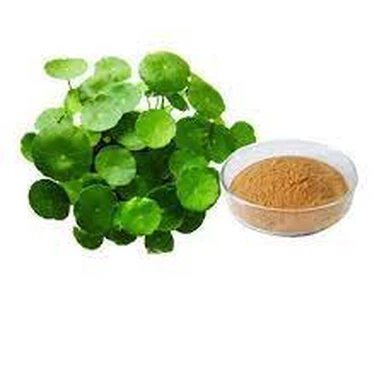
Cistanche is a traditional Chinese herb that has been used to treat a variety of health conditions, including kidney disease. There is some scientific evidence to support the use of Cistanche for kidney disease. A study published in the Journal of Ethnopharmacology found that Cistanche extract had protective effects on the kidneys of rats with kidney disease. The researchers concluded that Cistanche may be a promising therapeutic option for chronic kidney disease. Another study published in the Chinese Journal of Integrative Medicine looked at the effects of Cistanche on patients with chronic kidney disease. The researchers found that Cistanche improved kidney function and reduced levels of inflammation in the body. While these studies suggest that Cistanche may be beneficial for kidney disease, more research is needed to confirm these findings and determine the optimal dosages and treatment regimens.
References
1. Ge JB, et al. Presented at ACC 2021.
2. Kazuomi Kario, 24-hour blood pressure-lowering effect of sacubitril valsartan in Japanese patients with essential hypertension
3. Ito S, et al. Hypertens Res. 2015 Apr;38(4):269-75.
4. Wang B, et al. J Clin Hypertens (Greenwich). 2022 Jan 31.
5. Haynes R, et al. Circulation. 2018 Oct 9;138(15):1505-1514.
6. JACC Heart Fail. 2018 Jun;6(6):489-498.
7. Eloisa Trina Cesante, et al Presented at ASN Congress 2020.
8. Li, L. et al. (2015). Protective effects of Cistanche extract on rat kidney damage induced by chronic fluorosis. Journal of Ethnopharmacology, 162, 276-282.
9. Chen, J. et al. (2013). Effects of Cistanche deserticola on the renal function of patients with chronic kidney disease. Chinese Journal of Integrative Medicine, 19(9), 674-679.